

TMJ Pain While Chewing: Causes, Warning Signs, and Treatment Options

Updated: Jul 26
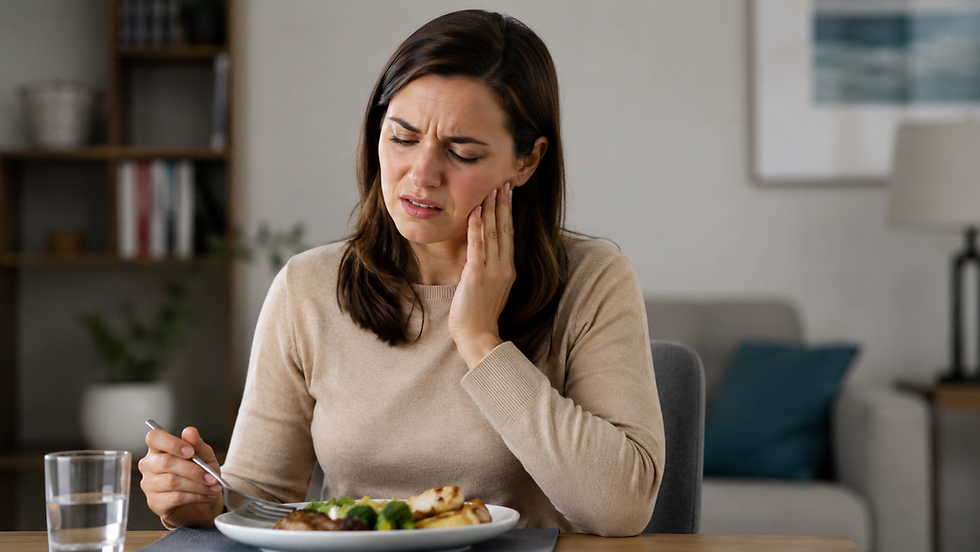
Chewing pain can slowly change the way a person eats. At first, they avoid hard foods. Then they start chewing only on one side. After a few weeks, even a normal meal feels tiring because the jaw becomes sore, tight, or uncomfortable.
For some people, this pain is linked to the temporomandibular joint, chewing muscles, teeth grinding, bite pressure, or poor jaw movement. That is why many patients searching for TMJ treatment in Chennai describe more than jaw pain alone. They may also have clicking near the ear, facial soreness, headache, neck tightness, or difficulty opening the mouth.
This blog explains why chewing can trigger TMJ pain, which warning signs need attention, and why treatment should begin with proper diagnosis.
When Chewing Pain Is More Than a Food Problem
Many people blame the food first. They may think the pain happened because they ate something hard, opened the mouth too wide, or chewed more than usual. Sometimes that may be true, especially when the discomfort is mild and settles quickly.
Repeated chewing pain is different. If the jaw aches during normal meals, gets tired quickly, clicks painfully, or feels stuck, the issue may involve the jaw joint or the muscles that control chewing.
A common pattern is simple. Breakfast feels manageable, lunch becomes uncomfortable, and dinner feels difficult. Another person may feel pain only with meat, nuts, crunchy snacks, or chewy foods. These patterns matter because they show how the jaw behaves under pressure.
The mistake to avoid is waiting until eating becomes restricted. Early evaluation can help identify whether the pain is muscle-related, joint-related, bite-related, grinding-related, or caused by another dental or medical condition.
Why the TMJ Can Hurt During a Meal
The temporomandibular joint sits in front of the ear. It helps the jaw open, close, and move side to side. Chewing is not only an up-and-down action. The joint, disc, ligaments, teeth, and muscles need to coordinate smoothly with every bite.
When this movement is strained, chewing can become painful. Some patients feel pain directly near the ear. Others feel it in the cheek, temple, jawline, or side of the face. The pain may feel dull, sharp, pulling, or pressure-like.
Painful clicking while chewing is also important. A painless click may not always require treatment, but clicking with pain, locking, limited mouth opening, or a catching sensation should be assessed.
TMJ pain while chewing is not always about the joint alone. The muscles may be tired. The bite may feel unstable. Teeth grinding may have already overloaded the jaw before the day begins.
Chewing Muscles Can Become Overloaded
Some patients say, “My jaw is not locked, but it gets tired when I eat.” This often points toward muscle overload. The chewing muscles are strong, but they are not meant to stay tense all day.
Clenching during work, stress, driving, or screen time can keep these muscles active for hours. Night grinding, also called bruxism, can add pressure while the patient sleeps. By the time they start eating, the muscles may already be strained.
This can create aching near the cheeks, temples, ear area, or neck. Some people also feel headache along with chewing pain. Others feel tenderness when pressing the side of the face.
Painkillers may reduce discomfort temporarily, but they may not solve the reason the muscles are overloaded. A TMJ-focused assessment looks for these hidden patterns instead of treating chewing pain as an isolated symptom.
Bite Pressure and One-Sided Chewing
When chewing hurts, many people shift food to the other side. This may give short-term relief, but it can create uneven pressure. Over time, one side may become overused while the painful side becomes weaker or more sensitive.
Bite imbalance can also contribute. If the upper and lower teeth do not meet comfortably, the jaw may keep adjusting during chewing. This repeated adjustment can strain the muscles and joint, especially when combined with clenching or bruxism.
Patients may describe this as “my bite feels different,” “one side hits first,” or “I cannot close my teeth comfortably.” These details are important during diagnosis.
A good treatment plan should not simply ask the patient to avoid foods forever. It should identify why chewing hurts and whether the bite, muscles, joint movement, or grinding habit is adding pressure.
Warning Signs That Need Attention
Chewing pain should be evaluated when it is frequent, worsening, or affecting normal eating. Pain with jaw locking, limited mouth opening, painful clicking, facial swelling, severe tenderness, or difficulty biting should not be ignored.
Other warning signs include ear discomfort, temple pain, neck stiffness, morning jaw tightness, headaches after chewing, tooth pressure, or soreness that continues after meals. If you have started avoiding certain foods or chewing only on one side, that is also a meaningful sign.
Not every chewing pain is TMJ disorder. Tooth infection, gum problems, impacted wisdom teeth, sinus issues, nerve pain, salivary gland problems, injury, arthritis, and other medical conditions can create similar symptoms.
Sudden severe pain, fever, swelling, trauma, numbness, chest pain, or rapidly worsening symptoms need urgent medical attention. TMJ treatment is useful only when the jaw joint, muscles, bite, or related structures are truly involved.
What a TMJ Evaluation in Chennai Should Include
A proper TMJ evaluation should begin with the patient’s story. When did the chewing pain start? Which foods trigger it? Does the jaw click, lock, or move to one side? Is there morning stiffness? Do headaches, ear pressure, or neck pain appear with it?
The clinical examination may check jaw opening, side-to-side movement, joint sounds, muscle tenderness, bite contact, facial pain points, signs of teeth grinding, and posture-related strain. In selected cases, imaging or dental scans may be recommended based on the findings.
This matters because two patients with the same complaint may need different care. One may have muscle-related pain from clenching. Another may have joint strain. Another may have bite-related overload or a dental issue that must be treated separately.
For patients looking for focused TMJ treatment in Chennai, Diagnox TMJ evaluates chewing pain along with jaw clicking, bruxism, bite discomfort, facial pain, and related headache or ear symptoms before planning care.
Treatment Options Should Match the Cause
TMJ treatment should not be one-size-fits-all. If the pain is muscle-related, the plan may focus on reducing overload and improving jaw relaxation. If grinding is involved, a custom oral appliance may be considered. If bite pressure is contributing, bite-related support may be needed.
Non-surgical TMJ treatment may include oral appliance therapy, habit correction, jaw relaxation guidance, muscle care, posture awareness, food modification during flare-ups, and coordinated care with other specialists when required.
Some patients benefit from avoiding gum chewing, nail biting, very hard foods, and wide mouth opening for a short period. Exercises may help selected patients, but they should be advised carefully because the wrong movement can worsen irritation.
The safest approach is diagnosis first, treatment next. A general mouthguard, random exercise video, or repeated painkiller use may not address the actual cause of chewing pain.
When to Seek TMJ Treatment in Chennai
You should consider a TMJ consultation if chewing regularly causes jaw pain, clicking, locking, tiredness, facial soreness, ear pressure, headaches, neck stiffness, or bite discomfort. It is especially important if the pain keeps returning or changes the way you eat.
This does not mean every patient needs complex treatment. Some people may need conservative care, habit correction, or short-term protection from strain. Others may need a more detailed plan based on the jaw joint, muscles, bite, and grinding pattern.
Diagnox TMJ supports patients from Chennai and across Tamil Nadu who experience TMJ pain while chewing, jaw clicking, bruxism, bite discomfort, facial pain, and non-surgical TMJ care needs.
If chewing has become painful, do not judge the problem only by how severe it feels today. Look at the pattern. Pain that keeps returning during meals is useful information. A TMJ-focused evaluation can help you understand why it is happening and what treatment path may be suitable.


Comments