

Why Does My Jaw Hurt When I Wake Up? Morning Jaw Pain Explained


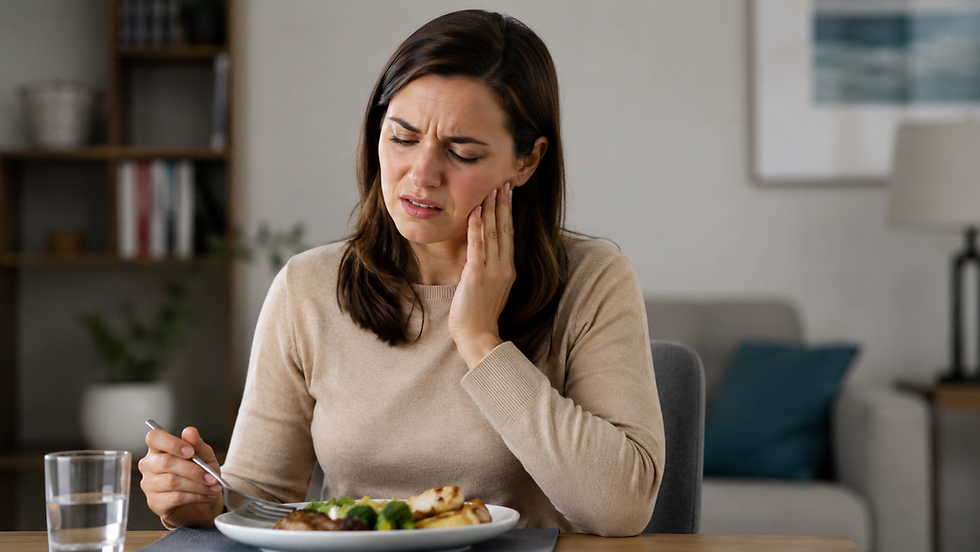
The first warning may arrive before breakfast. You yawn, but the jaw feels heavy, one cheek feels tired, or the teeth meet differently. A few minutes later, chewing makes the discomfort clearer.
That experience often leads to one question: “Why does my jaw hurt when I wake up?” Morning jaw pain may come from overnight clenching, tired chewing muscles, irritation inside the jaw joint, a dental problem, or sleep position. The most useful clue is often not the pain alone, but how it changes after you get out of bed.
Watch What Changes Before the Morning Gets Busy
A jaw that feels stiff on waking but loosens gradually may have been held under muscular tension during sleep. The masseter muscles at the sides of the face and the temporalis muscles near the temples can feel fatigued after sustained clenching.
A different pattern appears when pain becomes sharper during breakfast, stays focused around one tooth, or continues into the afternoon. Pain that settles within an hour and pain that grows with chewing may not have the same source.
These observations cannot diagnose the problem, but they help distinguish temporary strain from a recurring symptom.
Breakfast Becomes an Unplanned Jaw Test
The first meal often reveals more than the first yawn. Biting toast, chewing dosa, or opening for a spoon asks the jaw joints and muscles to work together after several hours of rest.
Broad soreness across both cheeks may suggest muscle fatigue. A deep ache in front of one ear, especially with catching or painful clicking, may involve the temporomandibular joint. Sharp pain when biting on one tooth may indicate decay, a crack, or another dental concern.
Notice whether the jaw opens straight, shifts sideways, or hesitates. A painless click alone does not automatically mean serious damage. Clicking with pain, locking, restricted opening, or a changing bite carries more clinical value than sound by itself.
Silent Clenching Can Leave Evidence Behind
Sleep bruxism is often associated with loud grinding, but a person may press the teeth together without making a sound. The jaw muscles still work, leaving tightness or fatigue by morning.
Other clues may include temple pressure, sensitive teeth, flattened tooth edges, chipped restorations, cheek ridges, tongue indentations, or difficulty opening comfortably. A partner may hear grinding, but the absence of noise does not rule out clenching.
Stress can influence clenching, but it should not explain every sore jaw. Sleep quality, certain medicines, alcohol or caffeine habits, breathing-related sleep problems, and individual muscle activity may also matter.
The Pain May Not Be Coming From the Joint
A painful area near the jaw is easy to label as “TMJ,” yet other conditions can feel similar. A cracked tooth, deep decay, gum infection, wisdom-tooth inflammation, or recent dental treatment may send pain into the cheek or ear region.
One-sided facial pressure may occur with sinus symptoms. Neck tension, sleeping with pressure on one side, or arthritis may also contribute.
Pain centred on one tooth, strong temperature sensitivity, swelling, fever, a bad taste, or pain that intensifies when biting should be assessed rather than managed as simple muscle tightness.
Keep a Short Record Instead of Testing the Jaw
Morning symptoms can be difficult to describe later because they may fade. A brief record for several days is more useful than repeatedly opening the mouth to check whether it still clicks.
Note which side hurts, what the pain feels like, how long it lasts, and what happens while eating. Record headaches, ear pressure, tooth sensitivity, locking, sleep quality, daytime clenching, grinding noticed by another person, and any bite change.
The aim is not self-diagnosis. It is to preserve a pattern that may fade as the day becomes busy.
Give an Irritated Jaw Less Work, Not More
Temporary care should be gentle. Choose softer foods when chewing hurts, avoid gum, and reduce foods that require prolonged chewing. Keep the teeth slightly apart when you are not eating rather than holding them together.
Gentle warmth may help muscular tightness. Support the head and neck in a neutral position, and avoid forceful stretching, very wide yawning, or repeatedly making the jaw click. These measures can reduce irritation, but they do not identify the cause.
A shop-bought mouthguard is not a universal answer. An oral appliance may protect teeth or redistribute pressure in selected cases, but it cannot address every joint, muscle, dental, or sleep-related problem. Locking, restricted movement, or a changed bite should be evaluated before relying on a generic device.
Know When the Pattern Has Moved Beyond Self-Care
One uncomfortable morning may settle. Assessment becomes more important when morning jaw pain returns regularly, lasts longer, interferes with chewing, or appears with restricted opening, painful clicking, locking, tooth damage, recurring headaches, or ear-area discomfort.
Seek prompt dental or medical attention for facial swelling with fever, difficulty swallowing or breathing, significant injury, or a jaw stuck open. Sudden jaw discomfort with chest pressure, breathlessness, sweating, nausea, or pain spreading to the arm, neck, shoulder, or back requires emergency medical evaluation.
Find the Source Before Choosing the Solution
A focused assessment should not assume that every patient grinds their teeth or needs the same appliance. It considers when pain appears, where it is felt, how the jaw moves, whether the muscles are tender, how the teeth are wearing, and whether locking, headaches, sleep concerns, or bite changes are present.
Diagnox examines the jaw joint, chewing muscles, movement pattern, bite, dental history, and symptom timing before recommending individualised non-surgical care. Imaging, bite-pressure analysis, or a TMJ orthotic may be considered when clinically relevant rather than used automatically.
Patients seeking TMJ treatment for patients from Chennai can visit the Diagnox centre in Marthandam for focused evaluation. Diagnox is not physically located in Chennai, but it serves patients travelling from the city and other parts of Tamil Nadu.
The useful question is not simply whether the jaw hurts in the morning. It is what changed overnight, what the first hour reveals, and whether the pattern keeps returning. Identifying those details before choosing treatment reduces guesswork and supports care based on the likely source.


Comments